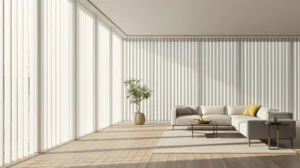
Solar shades at night do not give full privacy because they lose their one way benefit once indoor lights are on. They still help soften light and reduce glare, but people outside can usually see through them after dark. If you want complete privacy, you need an extra layer like curtains or a privacy shade. This is the simple and clear answer to how solar shades work at night.
Many homeowners love solar shades for sunlight control during the day. They feel modern, clean, and easy to use. At night, things change. The shade fabric becomes more open when lights are on inside the home. This makes it easier for someone outside to see in. That is why it is helpful to know what solar shades can and cannot do. This guide explains how they work, what limitations they have, and what you can do to fix privacy issues without worry.
Why Many Homes Struggle with Nighttime Window Privacy
Nighttime window privacy is a common concern for many families. During the day, sunlight shines from outside to inside. This makes it easy for solar shades to block glare and soften bright light. At night, the light direction changes. Indoor lights become bright, and outdoor spaces become darker. This light shift creates a situation where people feel exposed or uncomfortable. It can even feel like anyone walking outside could see their living room or kitchen.
Homes with large windows feel this even more. Big glass areas look beautiful, but they also bring challenges after dark. Many people use solar shades because they want to keep the view during the day without feeling closed in. Solar shades work well for daylight hours, but their nighttime performance is different. When lights come on inside the house, the fabric allows more detail to pass through. People often do not know this before buying, so they feel surprised later.
Families also struggle with choosing the right fabric. Some fabrics look solid during the day but act almost see through at night. The tighter the weave, the more privacy you get. The more open the weave, the less privacy at night. Without understanding how the shade material works, homeowners may end up with a shade that does not meet their privacy needs.
This confusion leads to stress and constant adjusting of lights and shade positions. The good news is that once you understand the science behind the fabric, finding the right solution becomes easy.
What Makes Evening Light Control Different from Daytime Needs

Light behaves in simple ways, but the way we feel about light depends on the time of day. During daylight hours, the sun is bright. This makes the outdoors much brighter than the inside of a home. When the outside is brighter, people cannot see in very well. Even if the shade fabric is a bit open, the strong sunlight blocks the view. That is why solar shades feel safe during the day.
At night, the brightness flips. Inside lights create a warm glow. Outside, it becomes darker because there is no sunlight. When this happens, the bright indoor light moves through the fabric much more easily. Even small holes in the fabric act like clear paths for light. To someone standing outside, these holes look like glowing spots that reveal shapes, movements, and sometimes full details of a room.
Evening light control is not only about privacy. It is also about comfort. Some homes feel too open at night when windows are not covered properly. People feel as if they are on display. This can cause stress or limit how relaxed someone feels in their home.
Another issue is glare from streetlights or nearby buildings. Some neighborhoods have bright security lights that shine through windows. Solar shades help reduce this light, but they will not block it fully. Understanding these differences helps you pick the right window treatment for every hour of the day.
How Solar Shades Work in Simple Terms
Solar shades use a special woven fabric that controls sunlight without blocking the view. The fabric has tiny openings. These openings let you see outside while still softening the amount of light that enters your home. The small holes also help reduce heat by letting warm air move through more freely.
During the daytime, these shades perform very well. The bright outdoors combined with the fabric design reduces glare and keeps rooms cooler. People enjoy clear views without feeling the sun directly on their skin. This is the main reason solar shades are so popular in modern homes.
The fabric comes in different openness levels. A one percent fabric has small openings and offers more privacy. A ten percent fabric has bigger holes and gives a better view but much less privacy. Most homeowners pick somewhere between three and five percent. It feels like a comfortable balance during the day.
The trouble comes when the sun goes down. When lights are on indoors, the openings in the fabric act like clear tubes that let indoor light shine outward. Someone outside can see inside because their side is darker. Solar shades do not reverse the effect at night. They cannot stop what happens with light direction. This is why understanding the design helps you make the right choice for your home.
What Happens to Solar Shades at Night When Lights Turn On
At night, solar shades work differently because the lighting conditions change completely. The fabric that softened sunlight earlier now becomes more see through. When indoor lights turn on, the bright light shines through the open weave. The darker outdoors makes it even easier to see the shapes, outlines, and activity inside the home.
This does not mean solar shades are bad. It only means they have a limit. They were designed for daytime sun control, not nighttime privacy. Some people do not notice this until they walk outside their home at night and look back through their windows. They are often surprised at how much they can see through the shade from the outside.
If the openness of the fabric is higher, such as five or ten percent, the shade will allow more visibility. A lower openness level will offer a little more coverage, but it still does not create complete privacy at night. The light direction is the main factor, and fabric alone cannot reverse this effect.
It is helpful to understand that even though solar shades are not full privacy shades at night, they still offer benefits. They keep rooms cooler during the day. They protect furniture from sun damage. They reduce glare on screens. They help maintain your outdoor view. At night, they simply need a partner shade or curtain if you want complete privacy.
Understanding When Privacy Solar Shades Help and When They Do Not
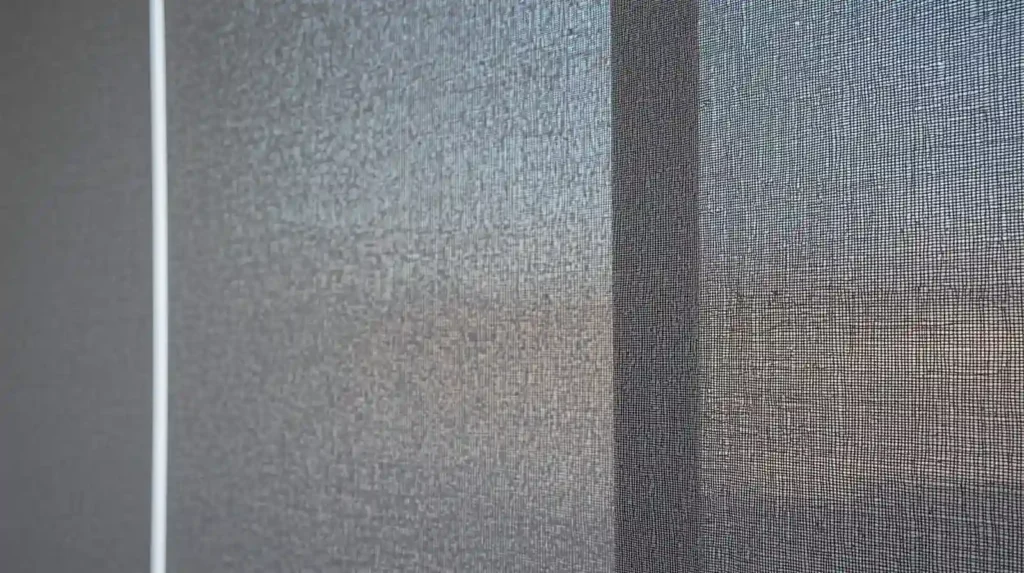
Privacy solar shades are designed to offer more coverage than standard solar shades. The fabric is tighter, and the weave is more controlled. These shades can help reduce visibility, but they still do not create full privacy once indoor lights are on. The darker it is outside, the easier it is for someone to see inside through any small holes.
Privacy solar shades help most during early evening hours when there is still some natural light outdoors. During that time, the lighting balance is closer. People inside feel more protected because the outside is not completely dark yet.
These shades do not help if the fabric openness is high or if indoor lighting is very bright. High brightness makes the fabric appear even more transparent. Also, if you stand close to the shade, it is easier to see through the fabric.
Homeowners should think of privacy solar shades as an improvement, not a full solution. They increase privacy but do not guarantee it. To achieve complete privacy, a second layer like curtains, blackout panels, or layered window treatments will give the best results.
Why Light Filtering Shades Offer Limited Privacy at Night
Light filtering shades are designed to soften sunlight and brighten a room with a warm glow. These shades allow natural light to pass through but still block harsh rays. They create a comfortable feel during the day, which many homeowners enjoy.
At night, light filtering shades act differently because they allow indoor light to pass through the fabric. The inside of a home usually has brighter lighting compared to the dark outdoors. Because of this contrast, anyone walking outside can often see inside the room. The amount of detail they see depends on how thick or thin the fabric is.
Light filtering shades are helpful during the day but offer limited privacy at night. Families who use these shades should consider pairing them with another layer if they want full privacy. Curtains or blackout shades are simple additions that fix the issue without changing the clean look of the window.
These shades work well in rooms where privacy is not the main concern, such as sunrooms or living spaces where people do not change clothes or sleep. For bedrooms and bathrooms, they do not give enough privacy for most people.
Best Ways to Improve Nighttime Privacy with Solar Shades
Improving nighttime privacy with solar shades is possible with the right steps. The first and simplest solution is to add curtains. Curtains offer full coverage when closed. During the day, you can keep them open to enjoy the sunlight filter through the solar shades. At night, closing the curtains creates complete privacy.
Another option is layering. Layering means adding a second window treatment that offers privacy while keeping the solar shade for daytime use. Blackout roller shades are a good match because they can be used only when needed.
Changing light placement also helps. When lights are positioned away from windows, there is less direct glow hitting the shade. This reduces how much people can see from outside, although it does not fully block visibility.
Choosing lower openness fabric is another way to improve evening privacy. A one percent fabric will show less of the inside compared to a five percent fabric. However, even at one percent, complete privacy is not possible without a second layer.
Some homeowners install smart shades. Smart shades allow easy control from a phone or remote. This makes it simple to close or adjust them at night. Automatic timers can lower privacy layers at sunset, providing convenience and peace of mind.
Recommended Alternatives for Full Privacy After Dark
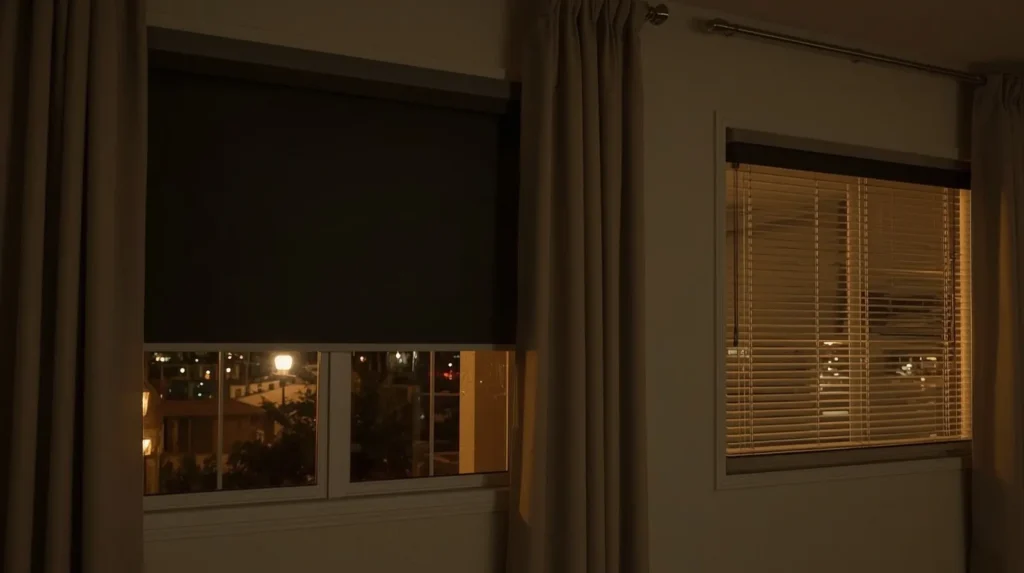
Solar shades alone cannot deliver complete privacy at night. That is why many homeowners look for alternatives. The most popular options include privacy roller shades, blackout shades, and layered window treatments. Privacy roller shades have a solid fabric that blocks visibility from both directions. They allow light to pass through in a soft way while keeping the outside view hidden.
Blackout shades offer the highest level of privacy. They block light completely and create full coverage at night. These shades are great for bedrooms where darkness is needed for sleep. They also work well in bathrooms and home theaters.
Curtains are also a strong option. Thick curtains block visibility and give rooms a warm, cozy feeling. They are easy to match with solar shades and can be opened or closed based on the time of day.
Some homeowners choose blinds with adjustable slats. These allow you to angle the slats in a way that keeps light controlled while still offering privacy. Blinds are handy for rooms where flexibility is important.
Layered treatments combine style and function. You can use solar shades during the day and privacy shades at night. This gives you the best of both worlds. Full control of light and privacy any time you need it.
Common Mistakes Homeowners Make When Choosing Night Privacy Shades
Many homeowners face privacy issues at night because they do not fully understand how solar shades behave in different lighting conditions. Here are the most common mistakes explained in a clear point by point format with added detail for better guidance.
- Choosing a shade based only on daytime appearance
Many people fall in love with how solar shades look when the sun is shining. They see the soft light, the clean style, and the nice outdoor view. They forget to check how the shade behaves at night, which is when privacy matters most. The shade that feels perfect during the day can act almost see through after dark. - Believing solar shades offer the same privacy at night as they do during the day
Daytime privacy works because sunlight outside is brighter than indoor light. At night, the inside becomes the brighter side. This makes the fabric more transparent. Many buyers do not expect this change and end up unhappy with the privacy level once lights are on. - Picking a high openness fabric without understanding what openness means
A five or ten percent openness lets you see outside more clearly during the day. That same openness becomes a problem at night because the holes are large enough to reveal shapes, movements, and even details inside the home. Homeowners often choose openness based on the daytime view without thinking about nighttime use. - Assuming bright outdoor lighting will hide the inside of the home
Some people believe that if their porch light or streetlight is bright, the inside will stay hidden. In reality, indoor lights are usually much brighter. The brighter source always wins. Even strong outdoor lighting does not stop others from seeing inside through the shade fabric. - Avoiding curtains or privacy layers because they want a clean look
Many homeowners buy solar shades because they want a simple, modern, uncluttered style. They skip buying curtains or privacy blinds because they worry it might ruin the look. Later, they feel uncomfortable at night and regret not planning for a second privacy layer. - Not measuring windows carefully before picking a shade
A shade that is too narrow or short leaves gaps on the sides. These small gaps become wide open channels for people outside to see in. Even a great shade cannot fix a poor measurement. Proper measuring or choosing a custom fit solves the problem. - Expecting one single shade to control sunlight and also block all nighttime visibility
Solar shades were created mainly for sunlight control, glare reduction, and daytime comfort. They were not designed to act like privacy shades at night. When people expect one shade to do both jobs perfectly, they feel disappointed. A layered setup is always the best approach for full privacy. - Choosing darker shade colors without knowing the effect on privacy
Darker fabrics reduce glare and give better daytime views. At night, darker fabrics act more transparent because the holes look more open when indoor lights shine through them. Many buyers do not know this and end up choosing a color that lowers night privacy even more. - Forgetting to test the shade before installation
Some people never walk outside at night to look back at their windows. They rely only on how it looks from the inside. Testing from both sides helps you understand real privacy levels. A quick night test often prevents future frustration. - Overlooking how indoor light placement affects visibility
Lights that sit close to windows make the shade glow. This glow makes shapes inside easy to see from outdoors. If homeowners knew this earlier, they might change bulb brightness, move lamps, or add a privacy shade to reduce visibility. - Ignoring the need for a second layer in rooms that require total privacy
Bedrooms, bathrooms, and dressing areas always need stronger privacy. Homeowners sometimes use solar shades alone in these rooms and later realize anyone outside can see inside at night. A second privacy layer keeps those rooms comfortable and safe. - Buying shades without asking questions about nighttime behavior
Many people trust product photos or quick descriptions. They forget to ask how the shade works in real nighttime conditions. Asking the right questions saves time and prevents choosing the wrong product. Simple guidance helps people make better decisions.
Smart Buying Tips for Solar Shades at Night in Paris, TX
When buying solar shades in Paris, TX, it helps to focus on both daylight and nighttime needs. Think about how much light your home gets during the day and how much privacy you want at night. Rooms that need privacy, like bedrooms and bathrooms, may need a second layer. Rooms used for relaxing or entertainment may only need solar shades during daytime hours.
Look at the openness level. A one percent fabric offers the most privacy among solar shade options, but it still does not create full privacy after dark. Choose an openness that balances view and coverage based on your daily routine.
Check the color of the fabric. Darker fabrics give better views during the day but offer lower privacy at night. Lighter fabrics offer more privacy but limit the outside view. This is an important balance.
Always measure your windows carefully. Proper fitting helps shades look beautiful and work correctly. A shade that is too small allows gaps around the sides that reduce privacy even more. Custom fit shades from a trusted company ensure accuracy.
Do not forget to consider your home style. Solar shades come in many colors and textures. Pick something that matches your decor and feels right for your family.
Why Parisian Window Treatments Is a Trusted Choice for Your Home
Parisian Window Treatments understands how important comfort, privacy, and style are for homeowners. Our team guides you through every detail so you know exactly what to expect from your window shades. We explain how solar shades perform during the day and at night so you make confident choices.
We listen to your needs and help you choose the right fabric, color, and privacy options. Whether you want better sun control, more privacy, or a layered system that does both, we can help. Parisian Window Treatments brings a warm and helpful service style that families appreciate.
Our goal is to make window upgrades simple. When people understand how shades work, they get better results and feel happier in their home.
If you want privacy and comfort that feels right every hour of the day or night, we are here to help. Reach out today to get guidance that fits your home, lifestyle, and budget.